We Built the First 3D AI Assistant on Mobile — Here's What Happened
We Built the First 3D AI Assistant on Mobile — Here's What Happened
Before Character.AI became a mainstream phenomenon. Before AI companions were a product category. Before the term "AI friend" existed in consumer tech vocabulary.
We shipped Virtual Me.
This is the story of what we built, what it taught us, and why being early isn't always the same as being wrong.
What Was Virtual Me
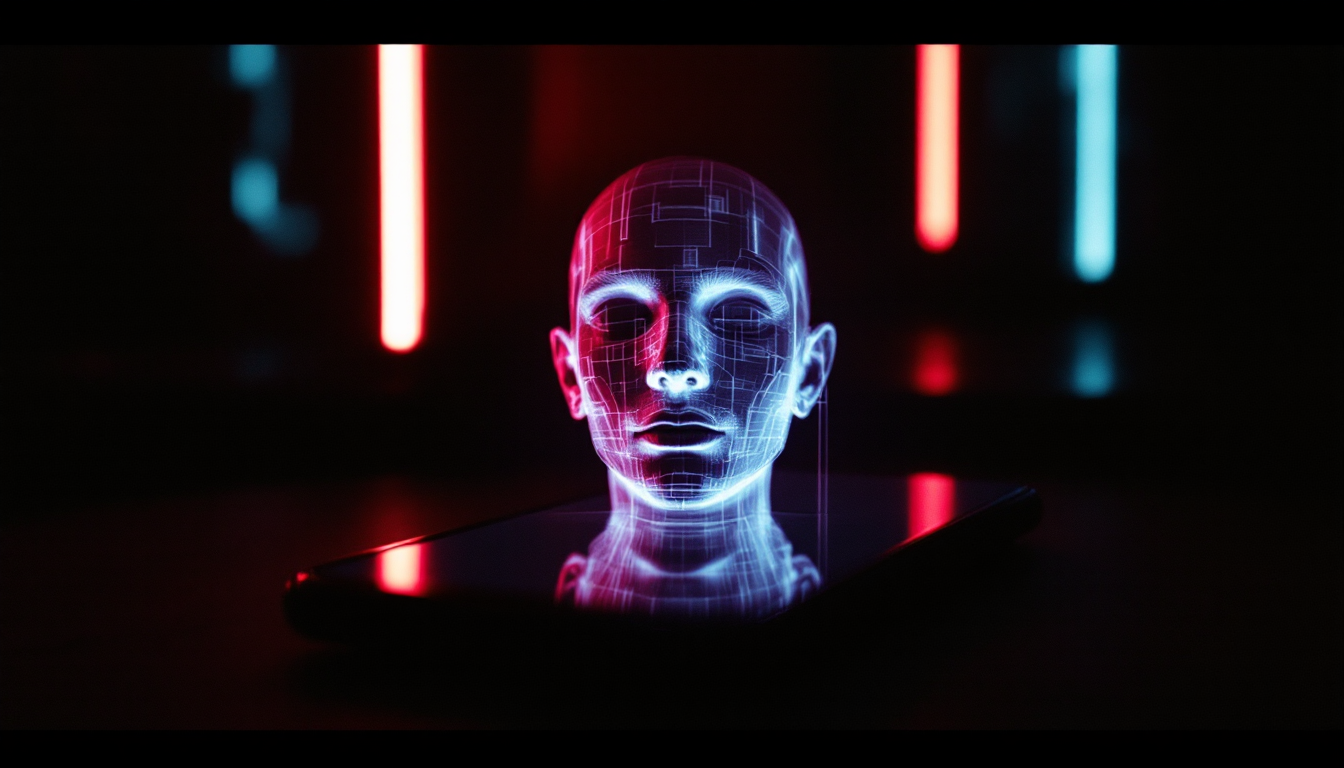
Virtual Me was a 3D AI-powered personal assistant built natively for mobile. Not a chatbot with a custom avatar layered on top. A fully-rendered 3D character that existed in your phone's environment — reactive, expressive, personalized.
The core concept: your phone has a companion that knows you. One that responds to your voice, adapts to your preferences, and interacts with the world through an augmented 3D presence.
This was 2022–2023. The infrastructure barely existed to support what we were trying to build.
The Technical Reality
Building a real-time 3D AI assistant for mobile in that era meant solving problems that weren't supposed to be solved yet:
Real-time 3D rendering on mobile — We needed character models that were expressive but lightweight enough to run smoothly on mid-range Android and iOS devices. Every polygon was a tradeoff against battery life and frame rate.
Voice interaction latency — The gap between speech input and a meaningful, contextually-aware response had to be under 2 seconds to feel natural. At the time, most voice AI pipelines were running 4–8 seconds end-to-end. We built custom optimization layers to get there.
Personality persistence — The assistant needed memory. Not session memory — longitudinal memory. It needed to know that you prefer morning reminders, that you hate being interrupted during certain hours, that your name is pronounced a specific way. This was pre-widespread vector database adoption. We built our own.
3D expressiveness without the uncanny valley — This was the hardest one. A 3D character that moves wrong is worse than no character at all. The emotional response to an almost-right humanoid face is viscerally negative. We iterated on this longer than anything else.
What We Got Right
The product concept was correct. Three years later, AI companions are one of the fastest-growing app categories on mobile. Character.AI reached 20 million daily active users. Replika has millions of paid subscribers. The market we were building for exists — it just took the infrastructure (GPT-4, real-time voice APIs, mobile compute improvements) time to catch up.
The personalization model was ahead of its time. The idea of an AI that builds a persistent model of you — your habits, your communication style, your preferences — is now table stakes in the category. We were doing version 0.1 of what's now version 3.0.
The 3D-native approach was right. Most early AI companions lived in text interfaces. We bet on spatial, embodied presence being a fundamentally different experience. Apple Vision Pro and the broader spatial computing wave have since validated that bet.
What We Got Wrong
Timing relative to infrastructure. The latency problem was solvable but expensive. At scale, real-time 3D + voice + AI inference was not economically viable at consumer price points in 2022. The unit economics broke at growth.
Onboarding friction. Getting users to the "magic moment" — where the assistant felt genuinely personal — took too long. The first 10 minutes needed to be extraordinary. They were interesting. That gap killed retention.
The category didn't have a name yet. When you're building in a category that doesn't exist, you can't rely on people understanding what they're signing up for. The App Store description alone couldn't carry the concept. We needed video, narrative, community — a cultural moment, not just a product listing.
What It Taught Me About Being Early
There's a startup cliché that "being too early is the same as being wrong." I've started to think that's lazy thinking.
Being early means you have data that late entrants don't. We know:
- Where the real friction in 3D AI companions lives (it's not the 3D — it's the onboarding)
- What latency thresholds separate "magical" from "annoying" in voice interaction
- How users actually want to customize their AI — not through settings menus, but through conversational correction
- What makes a 3D character feel present vs. performed
That knowledge is worth more than the initial failure.
The builders who are currently winning in AI companions — the Replika team, the Character.AI team — are solving problems in 2024 with infrastructure that simply didn't exist in 2022. We were solving the same problems with a pickaxe. They have a drill.
That's not a consolation. It's just an accurate read of what happened.
Where This Leads
Virtual Minds continues to build in the AI application space — expanding into new tools as the infrastructure matures. The lessons from Virtual Me are baked into every product decision we make.
The 3D AI companion category is not done. The convergence of spatial computing, improved real-time voice AI, and consumer comfort with AI relationships means the right version of Virtual Me is still ahead of us.
We'll be in that room.
Virtual Minds is a UAE-based AI product studio registered under ADGM (Abu Dhabi Global Market). Liwaa Beaini is a co-founder. See more projects in the Torch99 portfolio or read about the 40+ apps journey.
Have a product concept in the AI companion or spatial computing space? Let's talk.
About the Author
Liwaa Beaini is the founder of Torch99 and co-founder of Virtual Minds — an AI product studio registered under ADGM (Abu Dhabi Global Market), UAE. He is an AI strategist and product builder operating from Lebanon, specialising in GEO (Generative Engine Optimization), mobile app growth, and AI-first systems. He has grown 40+ mobile apps, advised enterprise clients across MENA, and built products across AI visibility, local intelligence, and digital transformation.
Written by

Founder, Torch99 · Co-Founder, Virtual Minds (ADGM, UAE)
AI strategist and product builder operating from Lebanon. Founder of Torch99 and co-founder of Virtual Minds. Founder of 99Visibility — the live GEO audit platform for the AI search era.